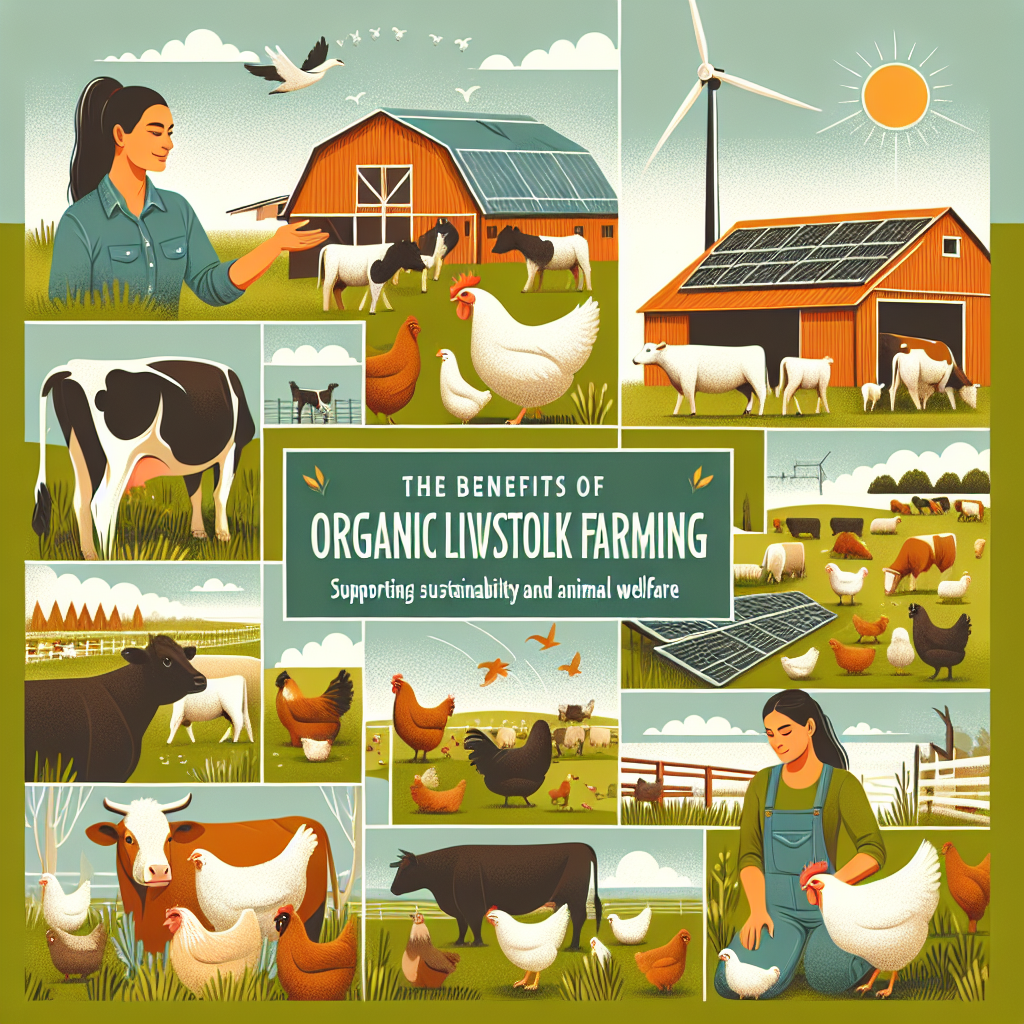
The Benefits of Organic Livestock Farming: Supporting Sustainability and Animal Welfare
In recent years, more people have started paying closer attention to where their food comes from—and how it is produced.
This shift in awareness has brought organic livestock farming into the spotlight as a more ethical, sustainable, and environmentally responsible way of producing meat, dairy, and eggs.
But what exactly makes organic livestock farming different, and why is it becoming so important in modern agriculture?
Let’s break it down in a simple, practical way.
Table of Contents
- What Is Organic Livestock Farming?
- 1. A More Sustainable Farming System
- 2. Supporting Biodiversity and Healthy Ecosystems
- 3. Improved Animal Welfare Standards
- 4. Natural Farming Practices Without Harmful Additives
- 5. Healthier and More Nutritious Food Products
- 6. Environmental Protection and Soil Health
- Challenges of Organic Livestock Farming
- Key Takeaways
- Frequently Asked Questions
- Conclusion
What Is Organic Livestock Farming?
Organic livestock farming is a method of raising animals for food production using natural and sustainable practices.
It avoids synthetic chemicals, growth hormones, genetically modified feed, and routine antibiotic use.
Instead, it focuses on natural feeding systems, humane treatment of animals, and environmentally friendly farm management.
In simple terms, it’s farming that tries to work with nature rather than against it.
1. A More Sustainable Farming System
One of the biggest advantages of organic livestock farming is its focus on long-term environmental sustainability.
Unlike conventional systems that rely heavily on synthetic inputs, organic farming prioritizes natural cycles and renewable resources.
How It Supports Sustainability
- Reduces dependence on chemical fertilizers and pesticides
- Encourages natural soil regeneration
- Lowers greenhouse gas emissions in some farming systems
- Promotes more balanced land use
This approach helps preserve natural resources for future generations while maintaining productive farmland today.
2. Supporting Biodiversity and Healthy Ecosystems
Healthy farms are not just about animals—they are about entire ecosystems.
Organic livestock farming supports biodiversity by encouraging a balanced relationship between animals, plants, soil, and wildlife.
For example, rotational grazing allows grasslands to recover naturally, which improves soil fertility and supports insects, birds, and other species.
Over time, this creates a more resilient and self-sustaining environment.
3. Improved Animal Welfare Standards
Animal welfare is one of the strongest pillars of organic livestock farming.
Animals are not treated as production units alone—they are treated as living beings with natural needs and behaviors.
Key Welfare Requirements
- Access to outdoor grazing areas
- Clean and comfortable living conditions
- Adequate space for natural movement
- Stress reduction through humane handling
This allows animals to live healthier, more natural lives, which can also reduce disease and stress-related issues.
4. Natural Farming Practices Without Harmful Additives
In conventional farming, growth hormones and antibiotics are often used to speed up production and prevent disease outbreaks.
Organic livestock farming takes a different approach.
Instead of relying on chemical interventions, it emphasizes prevention through better nutrition, hygiene, and living conditions.
What Is Restricted
- No growth hormones
- No routine antibiotic use
- No genetically modified feed (in most standards)
This results in food products that are produced more naturally and with fewer synthetic residues.
5. Healthier and More Nutritious Food Products
Many consumers choose organic livestock products because of their potential nutritional benefits.
Research suggests that organic meat and dairy may contain higher levels of omega-3 fatty acids and antioxidants compared to conventionally produced alternatives.
Possible Consumer Benefits
- Reduced exposure to synthetic chemicals
- Improved fatty acid profiles in dairy and meat
- Fewer antibiotic residues in food
While nutritional differences can vary, the focus on cleaner production methods is a key reason for growing demand.
6. Environmental Protection and Soil Health
Healthy soil is the foundation of healthy farming.
Organic livestock systems often integrate crop and animal production, which helps recycle nutrients naturally.
Manure is used as fertilizer, improving soil fertility without synthetic inputs.
Over time, this contributes to better water retention, reduced erosion, and improved land productivity.
Challenges of Organic Livestock Farming
While organic livestock farming has many benefits, it also comes with challenges that farmers must manage carefully.
- Higher production costs
- More land required per animal
- Stricter certification requirements
- Lower short-term yields compared to intensive farming
Despite these challenges, many farmers see long-term advantages in sustainability and market value.
Key Takeaways
- Organic livestock farming avoids synthetic chemicals and hormones
- It supports sustainability and healthier ecosystems
- Animal welfare is a core principle
- Food products are produced with fewer artificial inputs
- It promotes healthier soil and long-term environmental balance
- There are challenges, but also long-term benefits
Frequently Asked Questions
What is organic livestock farming?
It is a farming system that raises animals without synthetic chemicals, hormones, or routine antibiotics while focusing on natural and sustainable practices.
Is organic meat healthier?
Organic meat may contain fewer chemical residues and sometimes higher levels of beneficial nutrients, though results can vary.
Why is organic farming better for animals?
It provides better living conditions, outdoor access, and more natural feeding practices that improve overall animal welfare.
Is organic livestock farming expensive?
Yes, it can be more costly due to lower-scale production and stricter standards, but it often provides higher market value.
Can organic farming feed the world?
It has potential but requires balanced systems, improved efficiency, and supportive policies to scale sustainably.
Conclusion
Organic livestock farming represents more than just a farming method—it reflects a shift in how we think about food, animals, and the environment.
By focusing on sustainability, animal welfare, and natural production systems, it offers a more balanced and responsible approach to agriculture.
While it may not be without challenges, its long-term benefits for ecosystems, farmers, and consumers make it an increasingly important part of modern food systems.
Choosing organic products is not just a dietary decision—it’s a step toward supporting a more ethical and sustainable future.