Backyard Rabbit Farming: The Ultimate Beginner’s Guide to Sustainable Homesteading
There is a quiet revolution happening in backyards all across the globe. Families, homesteaders, and urban farmers are looking for ways to become more self-sufficient, cut down their grocery bills, and produce high-quality, organic food right at home. While chickens usually get all the spotlight, there is another small livestock option that is quieter, cleaner, and arguably far more efficient: the humble rabbit.
Backyard rabbit farming is one of the most practical and high-yielding ventures you can start. Whether your goal is to secure a steady supply of lean, organic meat, generate an alternative stream of income, or obtain premium fertilizer for your vegetable garden, raising rabbits fits the bill perfectly. They require minimal space, reproduce quickly, and do not make a peep—making them ideal even for suburban neighborhoods where noisy livestock like roosters are banned.
If you have been thinking about setting up your own mini-rabbitry but feel overwhelmed by where to start, you are in the right place. This comprehensive guide will walk you through everything you need to know to transition from an absolute beginner to a confident, successful rabbit handler. Let’s dive into the world of backyard rabbit keeping!
Table of Contents
- 1. The Real Benefits of Backyard Rabbit Farming
- 2. Selecting the Perfect Rabbit Breed for Your Goals
- 3. Designing a Comfortable and Safe Rabbit Hutch
- 4. Feeding for Growth: A Balanced Rabbit Diet
- 5. Rabbit Breeding Basics for Beginners
- 6. Keeping Your Herd Healthy: Common Issues and Prevention
- 7. Frequently Asked Questions
- 8. Wrap-Up: Taking Your First Step
1. The Real Benefits of Backyard Rabbit Farming
Before you build your first cage, it helps to understand exactly why rabbits are such a powerhouse for small-scale homesteading. They offer an incredible return on investment, both in terms of time and money.
- Unmatched Space Efficiency: Unlike cows, sheep, or even pigs, rabbits do not need pastures. A vertical stack of well-designed hutches can easily fit in a small corner of your yard, a garage, or a shaded patio.
- Incredible Reproductive Rates: Rabbits are legendary for their ability to multiply. A single breeding female (known as a doe) can give birth to 30 to 40 offspring (kits) every single year. That translates to a massive amount of sustainable protein for your household.
- Ultra-Low Feed Costs: Rabbits are herbivores that can thrive on a mix of commercial pellets, fresh forage, and high-quality hay. They excel at turning basic green vegetation into nutritious meat.
- The Secret Weapon for Your Garden: Rabbit manure is widely considered “black gold” by gardeners. Unlike chicken or cow manure, rabbit droppings are a “cold” fertilizer. This means you can drop it straight onto your vegetable beds without worrying about burning your plants. It is packed with nitrogen, phosphorus, and potassium.
- An Easy Entry into Animal Husbandry: If you have never raised livestock before, rabbits are a fantastic starting point. They are easy to handle, gentle, and their daily care routines are simple enough for children to help with.
2. Selecting the Perfect Rabbit Breed for Your Goals
Before buying your first pair, you need to decide what you are actually raising them for. Different breeds have been perfected over generations for specific purposes, such as meat production, fur quality, or companionship.
Meat Production Champions
If your primary goal is to put food on the table, you want breeds that grow rapidly, have a high meat-to-bone ratio, and possess calm, docile temperaments. The top choices include:
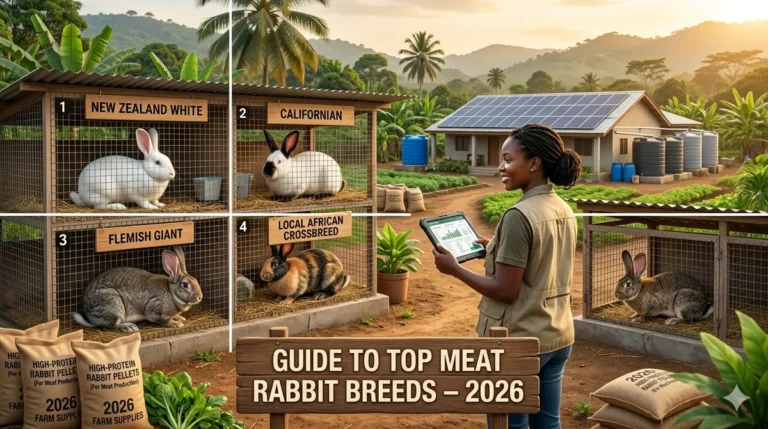
- New Zealand White: The undisputed king of commercial and backyard meat production. They typically weigh between 9 and 12 pounds at maturity, feature a blocky build, and grow exceptionally fast. Their calm nature makes them easy to manage.
- Californian: Easily recognizable by their white bodies with dark ears, nose, and feet. Weighing around 8 to 10 pounds, they are highly adaptable, have excellent mothering instincts, and yield premium-quality meat. Many breeders cross New Zealands with Californians to get the ultimate production hybrid.
- Flemish Giant: These are the true giants of the rabbit world, often weighing 14 pounds or more. While they do provide meat, they take longer to mature and eat significantly more feed than New Zealands or Californians, making them slightly less cost-effective for strict meat production.
Pet and Show Breeds
If you are looking to raise rabbits as friendly companions or for a small-scale pet business, look for smaller, highly social breeds:
- Dutch: Distinctive for their unique two-toned color patterns, these rabbits are compact (4 to 5 pounds) and incredibly friendly, making them a favorite for households with kids.
- Mini Lop: Famous for their floppy ears and sweet, affectionate dispositions. They are highly sought after in the pet market.
Real-World Tip: Never buy your foundational breeding stock blindly from online classifieds if you can avoid it. Visit local breeders or agricultural groups. Look for active, alert animals with clear eyes, clean ears, and a shiny coat. Starting with strong, healthy genetics will save you months of frustration.
3. Designing a Comfortable and Safe Rabbit Hutch
Your rabbit hutch is your animals’ entire world, so getting the design right is crucial for their health and happiness. A poor hutch layout leads to stressed, sick animals, whereas a great setup makes daily maintenance a breeze.
Core Requirements for a Successful Setup:
- Ample Space: As a rule of thumb, each adult rabbit needs at least 3 feet by 2 feet of floor space. Larger breeds like Flemish Giants require significantly more room to stretch out and move comfortably.
- Smart Flooring Strategy: The floor of the hutch needs to balance cleanliness with comfort. Many homesteaders use a heavy-duty wire mesh (with half-inch gaps) to allow droppings and urine to fall through into a collection tray or directly onto the ground. However, sitting on wire constantly can cause painful foot sores (sore hocks). To prevent this, always provide a solid resting board—like a piece of smooth wood or a plastic mat—where the rabbit can sit comfortably off the wire.
- Predator and Weather Protection: Rabbits are prey animals, and local wildlife (or neighborhood dogs and cats) will try to get to them. Ensure your hutch is elevated off the ground, made of sturdy materials, and secured with strong latches. It must also feature a solid, sloped roof to keep rain and snow out.
- Ventilation and Temperature Control: Rabbits tolerate the cold surprisingly well, but they are incredibly sensitive to heat. Ambient temperatures above 85°F (29°C) can easily cause fatal heat stroke. Always place your hutch in a shaded area, ideally under a tree canopy or an awning, and ensure there is plenty of fresh airflow moving through the enclosure.
Pro-Tip: If you live in an area with brutal summer heat, keep plastic soda bottles filled with water in your freezer. On scorching days, drop a frozen bottle into each rabbit’s cage. They will lie against it to stay cool and comfortable.
4. Feeding for Growth: A Balanced Rabbit Diet
Feeding rabbits is straightforward, but it requires consistency. A rabbit’s digestive tract is highly specialized and relies heavily on a constant influx of fiber to keep working properly. A sudden change in diet can disrupt their gut flora and prove fatal.
The Ideal Daily Feeding Blueprint:
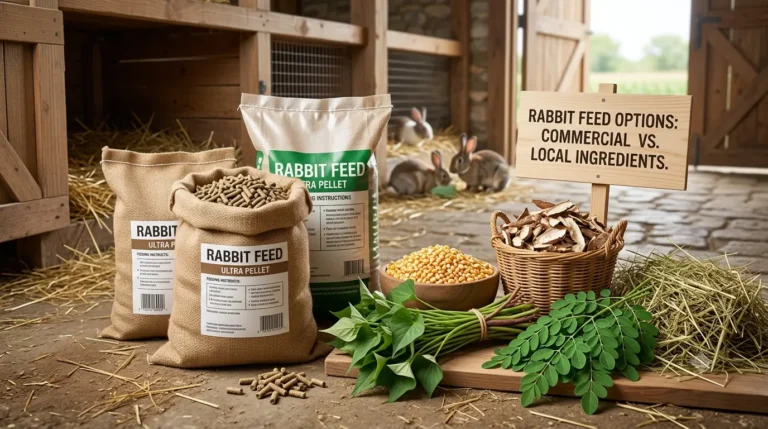
- High-Quality Hay (70% of the diet): This is the most critical element. Unlimited access to fresh grass hay (like Timothy, Orchard, or Meadow hay) keeps their digestive tract moving and naturally wears down their teeth, which grow continuously throughout their lives. Alfalfa hay is excellent for growing kits and nursing mothers because of its high calcium and protein content, but it is too rich for idle adult rabbits.
- Commercial Pellets (20% of the diet): Look for high-fiber, uniform pellets that contain roughly 16% to 18% crude protein. Pellets ensure your rabbits get all the essential vitamins and minerals they need for optimal growth. Avoid feed mixes that include colorful bits, seeds, or dried fruit, as rabbits will selectively pick out the sugary pieces and leave the nutrition behind.
- Fresh Green Forage (10% of the diet): Supplement their meals with dark, leafy greens such as romaine lettuce, kale, cilantro, parsley, carrot tops, and dandelion leaves. Introduce these slowly to avoid upsetting their stomachs. Never feed them iceberg lettuce, as it contains too much water and a chemical compound called lactucarium, which can cause severe diarrhea.
- Continuous Clean Water: Rabbits drink a surprising amount of water. Ensure they have access to clean, cool water 24/7 via heavy ceramic bowls (which they cannot flip over) or gravity-fed drip bottles.
5. Rabbit Breeding Basics for Beginners
Once your breeding stock reaches maturity (usually around 6 months of age for medium breeds), you can plan your first breeding cycle. While rabbits reproduce easily, there are a few golden rules you must follow to protect your animals.
The Golden Rule of Rabbit Breeding:
Always take the doe (female) to the buck’s (male) cage, never the other way around. Does are fiercely territorial over their living space. If you drop a male into a female’s cage, she is likely to attack and seriously injure him. In contrast, when she is introduced to his territory, he will immediately get down to business.
The entire mating process happens very quickly—often within a few minutes. Once the buck is successful, he will typically make a soft noise and literally fall off the side of the doe. For good measure, breeders often leave them together for a short time or reintroduce them later that same day before returning the doe to her home cage.
Gestation and Kindling (Giving Birth)
A rabbit’s pregnancy lasts between 28 and 31 days. Around day 25, you should place a clean wood or metal nesting box inside the doe’s cage. Fill it with soft straw or wood shavings. As her due date approaches, the doe will naturally begin pulling soft fur from her own belly to line the nest, creating a warm, cozy environment for her incoming litter.
A typical litter consists of anywhere from 6 to 10 kits. They are born completely blind and hairless. During this time, ensure the mother has unlimited access to high-protein pellets and fresh water so she can produce enough milk to feed her fast-growing babies.
6. Keeping Your Herd Healthy: Common Issues and Prevention
A healthy rabbit is active, curious, has bright eyes, clean ears, and a dry nose. Because they are prey animals, rabbits naturally hide their illnesses until they are very sick. This makes daily visual inspections incredibly important.
Common Health Challenges to Monitor:
- Coccidiosis: This is an intestinal parasite infection that can strike young kits, often causing severe diarrhea, lethargy, and weight loss. The best prevention is strict cleanliness. Keep the wire floors free of stuck manure and clean water systems regularly.
- Snuffles (Pasteurellosis): A highly contagious bacterial respiratory infection. Symptoms include white nasal discharge, sneezing, and matted fur on their front paws (from wiping their noses). To prevent this, avoid overcrowding your rabbits and ensure their housing has exceptional ventilation to prevent ammonia buildup from their urine.
- Sore Hocks: Raw, bleeding sores on the bottom of a rabbit’s hind feet. This occurs if they spend all their time on rough wire flooring without a solid area to rest, or if the cage is damp and dirty. Provide a smooth resting mat and keep the environment dry to avoid this issue.
- Ear Mites: If you notice your rabbit shaking its head frequently or scratching its ears, look inside. If you see a crusty, brown buildup, it likely has ear mites. This can be treated effectively with a few drops of mineral oil or specific veterinary medications.
The Golden Rule of Health: Quarantine any new rabbit you bring onto your property for at least 30 days away from your existing herd. This gives you time to ensure they aren’t carrying any hidden illnesses into your clean rabbitry.
7. Frequently Asked Questions
How much physical space do I actually need to start?
Surprisingly little! A standard 6-foot by 8-foot footprint in your backyard is more than enough space to comfortably set up a multi-tiered hutch system that accommodates 4 to 6 adult rabbits along with their litters.
Can I house rabbits and chickens together in the same coop?
While it might seem like a great space-saving idea, it is highly discouraged. Chickens carry specific bacteria and respiratory pathogens that can be fatal to rabbits. Additionally, chickens are opportunistic and may peck at rabbits, causing injury, and their scratching behaviors create a lot of dust that irritates a rabbit’s sensitive lungs.
What is the realistic lifepsan of a domestic rabbit?
When well cared for, domestic rabbits can live anywhere from 8 to 12 years. However, production animals used heavily for breeding generally have shorter productive lifespans, typically around 3 to 5 years, before they need to be retired.
How often can a doe safely have litters each year?
While a doe is physically capable of getting pregnant again almost immediately after giving birth, doing so will quickly exhaust her body and lower her lifespan. For a sustainable, humane backyard setup, aiming for 4 to 5 litters per year allows the mother plenty of time to rest and recover between batches.
Is backyard rabbit farming genuinely profitable?
Yes, it absolutely can be! Because rabbits reproduce so rapidly and have relatively low initial setup and feed costs, you can quickly see a return on your investment. Profitability comes from selling high-quality breeding stock to other homesteaders, selling processed meat locally, marketing their premium manure to gardeners, or selling friendly pelts and pets.
8. Wrap-Up: Taking Your First Step
Starting a backyard rabbit farm is one of the most practical, fulfilling, and sustainable choices you can make for your homestead. They are quiet, incredibly productive, and provide a self-contained ecosystem of organic meat and premium garden fertilizer. By focusing on high-quality breeding stock, building a secure and well-ventilated hutch, and maintaining a high-fiber diet, you are setting yourself up for long-term success.
Don’t worry about building a massive commercial operation right out of the gate. Start small with just one buck and two does. Learn their habits, master the daily routine, and watch your backyard homestead thrive. Happy farming!