Top Rabbit Breeds for Meat Production in Africa
If you’ve spent any time around small-scale livestock farmers across Africa, you’ve probably noticed something interesting happening in backyards, on rooftops, and in small fenced enclosures behind family homes: rabbits. Quietly, without much fanfare, rabbit farming has grown into one of the most practical protein solutions for households and entrepreneurs across the continent. It doesn’t need acres of land, it doesn’t demand deep pockets to start, and the right breed can turn a modest setup into a steady source of income and food security.
But here’s the catch most beginners run into: not every rabbit breed is built for meat production. Some are bred for fur, some for show, and some simply don’t grow fast enough to make commercial sense. Choosing the wrong breed is one of the most common (and costly) mistakes new rabbit farmers make in Africa.
This guide walks you through the breeds that actually work — the ones proven to thrive in African climates, convert feed efficiently, and put meat on the table faster than the rest.
Table of Contents
- Why Rabbit Farming Makes Sense in Africa
- What Makes a Good Meat Rabbit Breed
- New Zealand White
- California White
- Chinchilla (Giant and Standard)
- Flemish Giant
- Dutch Rabbit
- Local Crossbreeds and Hybrids
- How to Choose the Right Breed for Your Farm
- Practical Tips for Raising Meat Rabbits in Africa
- Frequently Asked Questions
- Final Thoughts
Why Rabbit Farming Makes Sense in Africa
Before diving into breeds, it’s worth understanding why rabbits, specifically, have become such an attractive option for African farmers. Unlike cattle or goats, rabbits don’t need vast grazing land. A small backyard, a converted shed, or even a balcony setup with proper hutches can support a productive rabbitry.
Rabbits also reproduce fast. A healthy doe can have four to six litters a year, with each litter producing six to ten kits. That kind of turnover means a small starting herd of just a few rabbits can multiply into a sizable meat-producing operation within a year.
Then there’s the nutrition angle. Rabbit meat is lean, high in protein, and lower in fat and cholesterol than chicken or beef. For families dealing with food insecurity or rising meat prices, that’s a meaningful difference. For entrepreneurs, it’s an opening into restaurants, hotels, and health-conscious consumers who are actively looking for alternative protein sources.
What Makes a Good Meat Rabbit Breed
Not all rabbits are created equal when it comes to meat production. Before picking a breed, it helps to understand the traits that actually matter for someone raising rabbits commercially or for household consumption.
- Growth rate: The faster a rabbit reaches market weight (usually 4–5 kg), the quicker your return on investment.
- Feed conversion: Good meat breeds convert feed into muscle efficiently, which keeps your costs down.
- Litter size: Breeds that produce larger litters mean more meat per breeding cycle.
- Heat tolerance: Africa’s climate varies widely, but many regions are hot. Breeds that handle heat stress well are far easier to manage.
- Disease resistance: Hardier breeds reduce losses and veterinary costs, which matters a lot for small-scale farmers without easy access to vet services.
With those criteria in mind, let’s look at the breeds that consistently perform well across African farms.
New Zealand White
If there’s one breed that dominates commercial rabbit farming worldwide, it’s the New Zealand White. And for good reason. These rabbits grow fast, often reaching 4–5 kg in just 12 weeks, which is remarkably efficient.
Their pure white coats are a bonus too, since the lack of pigment makes the carcass more visually appealing for buyers who care about presentation. New Zealand Whites also have calm temperaments, which makes them easier to handle, especially for beginners who are still learning the ropes of animal husbandry.
Does typically produce litters of 8–10 kits, and they’re known for being attentive, low-stress mothers. This breed is widely available across East and Southern Africa, partly because many agricultural extension programs and NGOs have promoted it as a starter breed for rural farmers.
California White
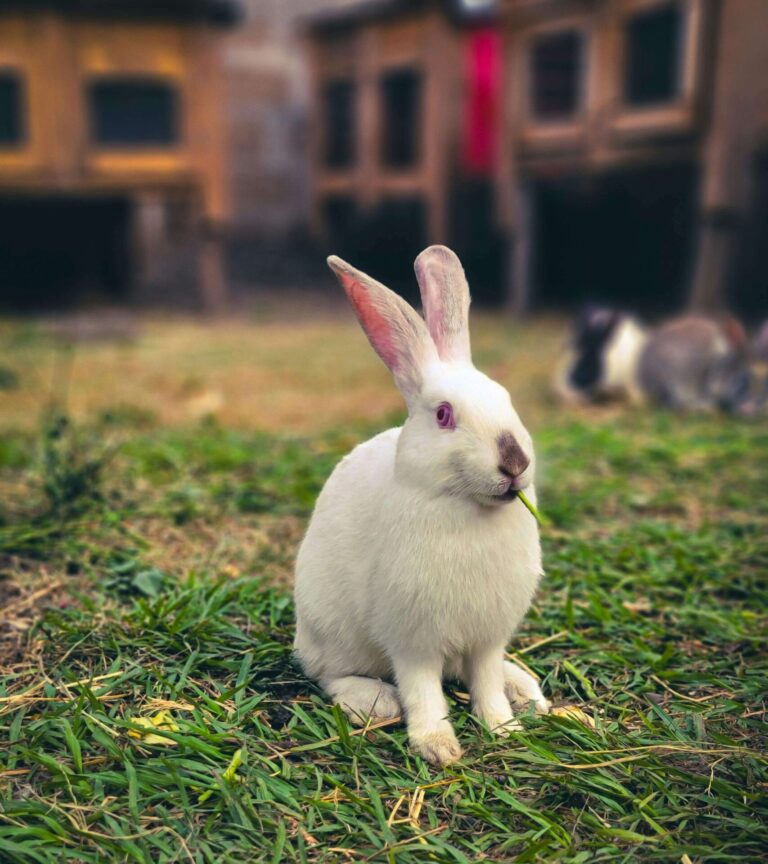
The California White is often mentioned in the same breath as the New Zealand White, and honestly, the two make a fantastic crossbreeding pair. On its own, the California White is recognizable by its white body with darker points on the ears, nose, feet, and tail — a coloring pattern similar to Siamese cats.
This breed grows almost as fast as the New Zealand White and has excellent meat-to-bone ratio, meaning more usable meat per carcass. California Whites also tend to handle confinement well, which matters a lot in urban and peri-urban farming setups where space is tight.
Many commercial rabbitries in Nigeria, Kenya, and Ghana favor a California-New Zealand cross because it combines the growth speed of one breed with the carcass quality of the other.
Chinchilla (Giant and Standard)
Don’t let the name fool you — this isn’t the small rodent pet you’re picturing. The Chinchilla rabbit, particularly the Giant Chinchilla, was specifically developed for meat production, and it shows in its build: broad shoulders, a deep body, and solid muscle mass.
What makes this breed appealing for African farmers is its adaptability. Chinchillas tolerate a range of climates reasonably well and are known for being hardy against common rabbit ailments. Their grey, slate-colored fur also has commercial value if you’re interested in supplementing income through pelt sales.
Standard Chinchillas reach market weight a bit slower than New Zealand or California breeds, but the Giant variety can rival them, sometimes exceeding 6 kg at maturity. For farmers thinking long-term and wanting dual-purpose value (meat plus fur), this breed deserves serious consideration.
Flemish Giant
The Flemish Giant is exactly what it sounds like — big. Mature bucks can weigh upwards of 7–9 kg, making it one of the largest domestic rabbit breeds in the world. For farmers focused on maximizing meat yield per animal, this breed is hard to ignore.
That said, Flemish Giants grow more slowly than New Zealand or California breeds, often taking 6–8 months to reach full market weight. They also eat considerably more, which raises feed costs. This makes them better suited to farmers who have reliable access to affordable feed, such as those growing their own forage or supplementing with kitchen scraps and garden waste.
Many farmers in West Africa use Flemish Giants in crossbreeding programs, pairing them with faster-growing breeds to produce offspring with both size and quicker maturity.
Dutch Rabbit
The Dutch rabbit is smaller than the breeds mentioned above, typically maxing out around 2–2.5 kg, but it earns its place on this list for a different reason: efficiency in small operations and excellent mothering instincts.
Dutch rabbits are known for their calm nature and reliable breeding cycles. For households raising rabbits mainly for home consumption rather than commercial sale, this breed offers a manageable, low-maintenance option. It’s also a popular choice for beginners learning how to manage breeding, weaning, and basic husbandry before scaling up to larger breeds.
Local Crossbreeds and Hybrids
Here’s something that doesn’t get talked about enough in breed guides: a huge number of successful rabbit farmers across Africa aren’t raising pure breeds at all. They’re raising crosses — often a mix of New Zealand White, California White, and whatever hardy local stock was available when they started.
These crossbreeds tend to combine the best of both worlds: the fast growth of commercial breeds with the resilience of animals that have already adapted to local conditions, local feed sources, and local disease pressures. If you’re just starting out and pure breeding stock isn’t easily accessible or affordable in your area, a good crossbred line is often the smarter, more practical choice.
Talk to established farmers in your region before assuming you need imported, purebred stock. Sometimes the rabbits already thriving in your community are your best starting point.
How to Choose the Right Breed for Your Farm
With several solid options on the table, how do you actually decide? Here’s a practical framework:
- If you want fast turnover and commercial scale: Go with New Zealand White or California White, or a cross of the two.
- If you want maximum meat per animal and have reliable feed access: Consider the Flemish Giant or Giant Chinchilla.
- If you’re just starting out with limited space and experience: The Dutch rabbit is forgiving and easy to manage.
- If pure breeds are hard to source locally: A well-established local crossbreed line will likely outperform an imported breed struggling to adapt.
It’s also worth visiting a few local rabbitries before committing. Seeing how a breed actually performs in your specific climate and feed conditions tells you more than any guide ever could.
Practical Tips for Raising Meat Rabbits in Africa
Choosing the right breed is only half the equation. Here are a few field-tested tips that make a real difference in productivity:
- Prioritize ventilation: Heat stress kills more rabbits than disease in many tropical regions. Shaded, well-ventilated hutches are non-negotiable.
- Feed consistently: Combine commercial pellets (where affordable) with local forage like Moringa, sweet potato vines, or Calliandra to cut costs without sacrificing growth.
- Keep accurate breeding records: Track mating dates, litter sizes, and weaning weights so you can identify your best-performing does over time.
- Vaccinate and deworm regularly: Even hardy breeds benefit from basic preventive care, especially against coccidiosis, which is common in humid climates.
- Start small, then scale: A pair or trio of rabbits is enough to learn the basics before investing in a larger herd.
Frequently Asked Questions
Which rabbit breed grows fastest for meat in Africa?
The New Zealand White and California White are generally the fastest-growing breeds, often reaching market weight within 10–12 weeks under good feeding conditions.
Can I cross-breed rabbits for better meat production?
Yes. Crossbreeding, especially between New Zealand White and California White, is common and often produces offspring with strong growth rates and good carcass quality.
How much space do I need to start a meat rabbit farm?
A small backyard setup with a few hutches is enough to start. Many successful farmers in Africa began with under 20 square meters of space.
Is rabbit farming profitable in Africa?
It can be, particularly given rabbits’ fast reproduction rate, low feed costs compared to larger livestock, and growing demand for lean protein in urban markets.
What do meat rabbits eat in African farming conditions?
A mix of commercial pellets, fresh forage like Moringa or sweet potato vines, and kitchen scraps works well, balancing cost with nutrition.
Final Thoughts
Rabbit farming isn’t flashy. It won’t make headlines the way large-scale poultry or cattle operations do. But for thousands of small farmers across Africa, it’s quietly become one of the most reliable paths to consistent food and income. The difference between a rabbitry that struggles and one that thrives often comes down to a single early decision: choosing the right breed for your goals, your climate, and your resources.
Whether you go with the speed of a New Zealand White, the size of a Flemish Giant, or a resilient local cross, the most important step is simply getting started — and learning as your herd grows.